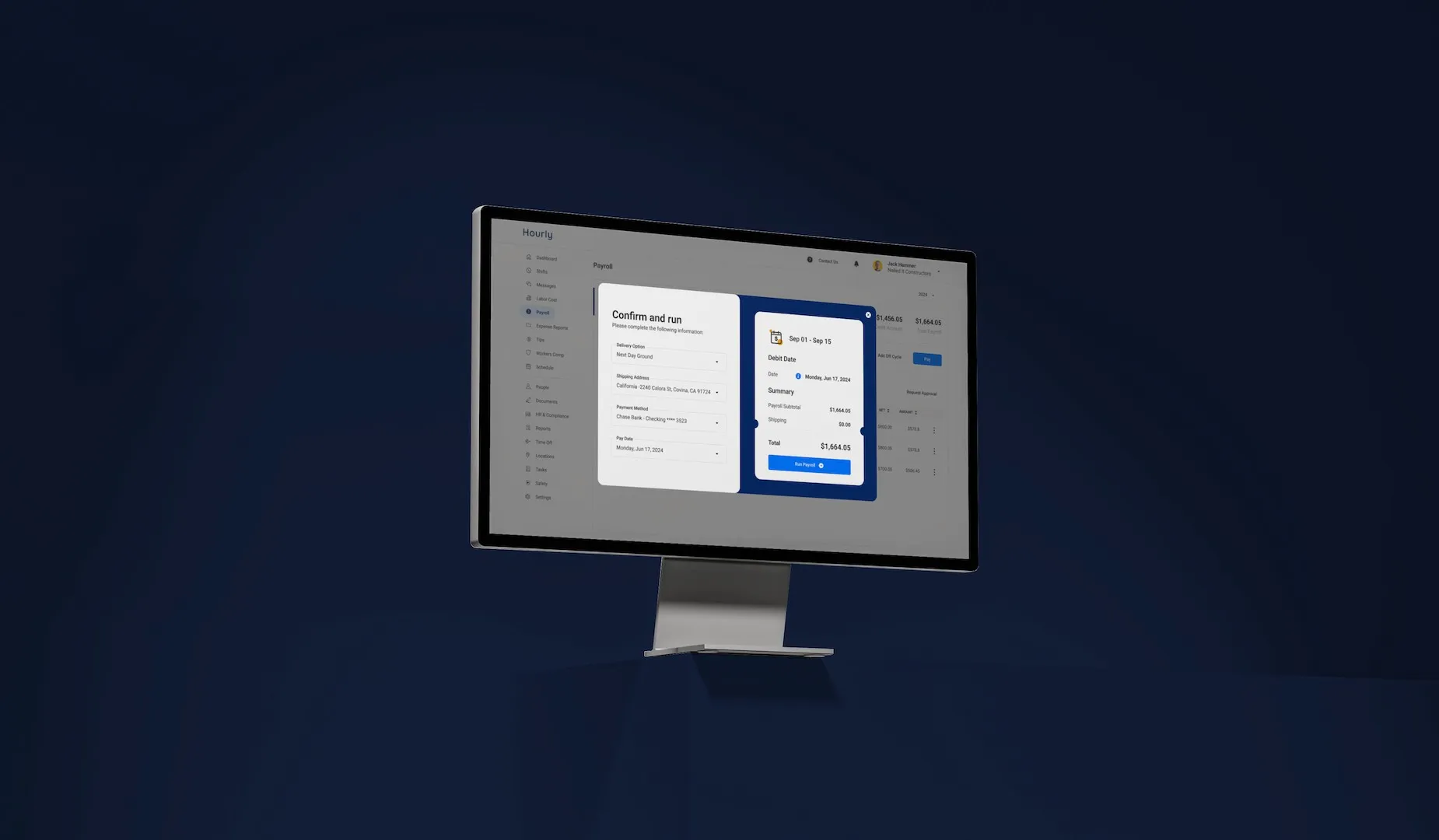
Customer Onboarding
Reducing time to onboard from weeks to under 5 minutes. Eliminating fraud risk and unifying a fragmented, email-driven process across Sales, Compliance, and Customer Success.
About Hourly
Hourly is a workforce management and payroll platform for SMBs with hourly workers. I joined as the first (and for several years, only) product designer at a company of ~6 people, and built the design function from the ground up through rapid growth to 70+ employees and eventual acquisition.
- Role
- Product Design Director · Strategy
- Timeline
- 2025
- Location
- Remote
The Problem
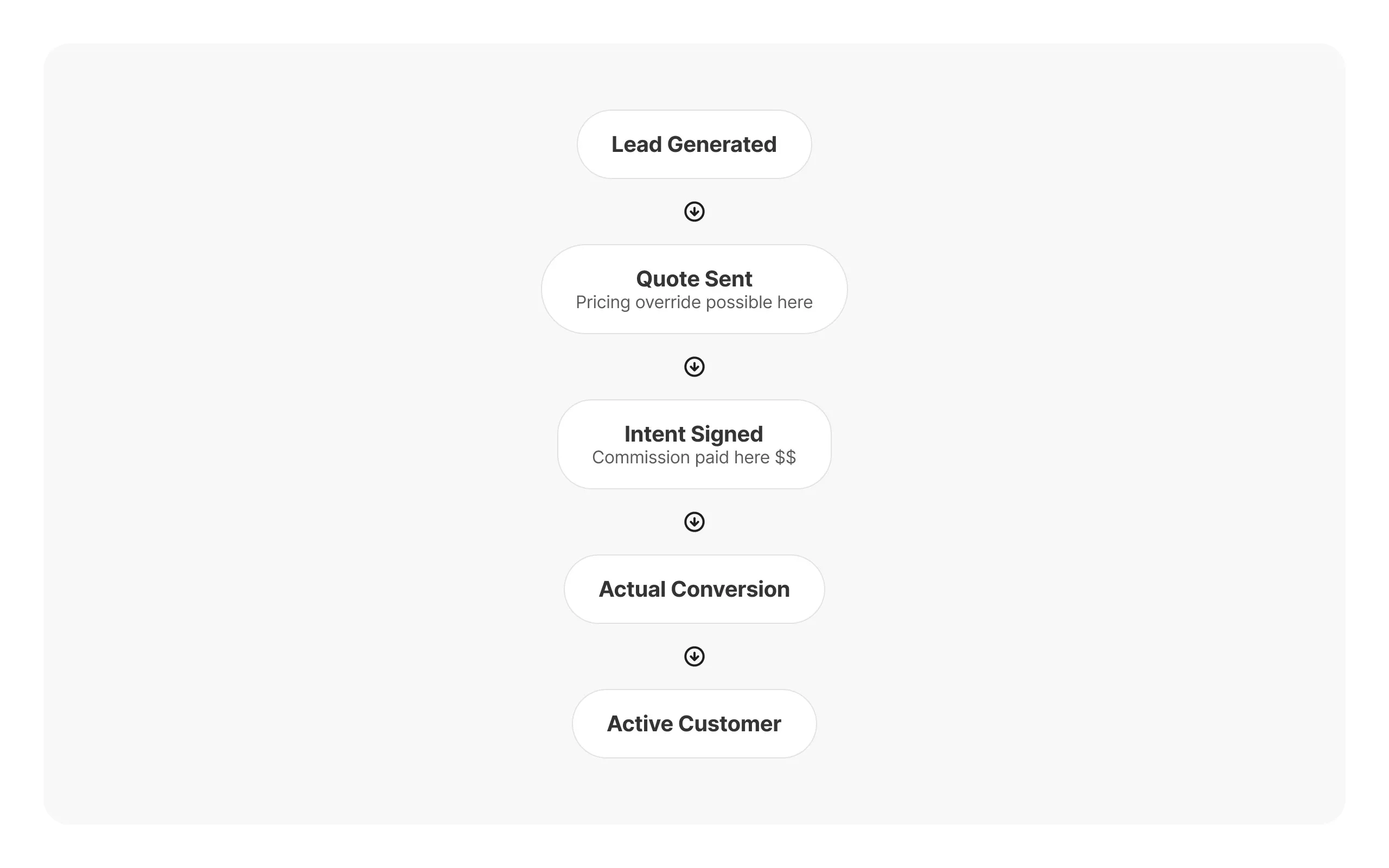
Customer retention wasn’t the issue, 94% of customers stayed. Getting them in the door was the problem. Every step from first contact to active account ran through email: informal data requests, manually prepared quotes with no guardrails, commissions paid before anyone verified a lead was real. The process averaged several weeks, and no one in Sales, Compliance, or Customer Success could see where any given customer stood.
The Thinking
I ran discovery across all three internal roles. Not a survey. Structured sessions where I was trying to answer four specific things: what each role actually needed from the process, the minimum data required to satisfy compliance and banking partners, the step order that would capture customers fastest without breaking legal requirements, and where fraud was entering the system.
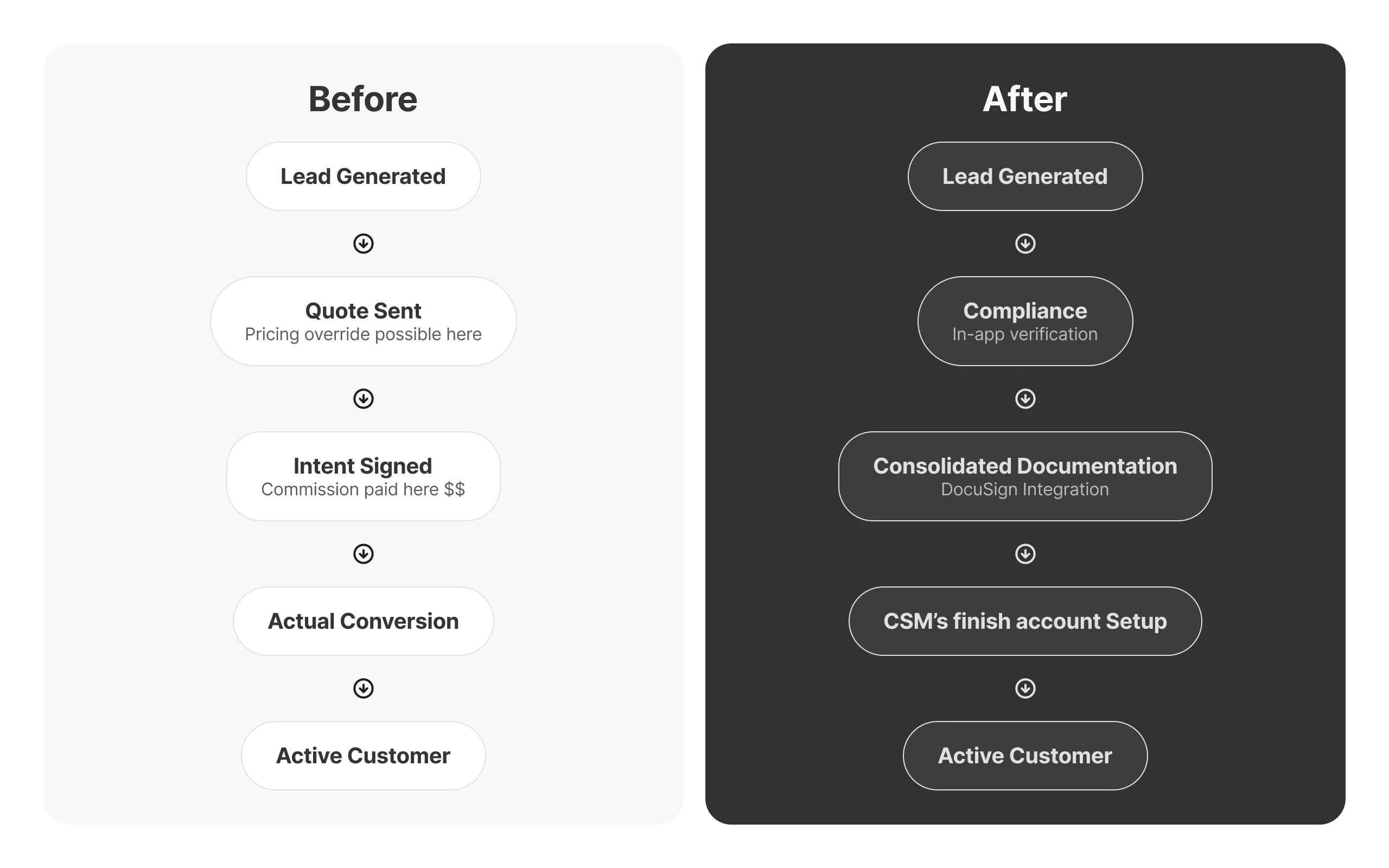
One thing became obvious fast. The sequence was backwards. We were asking customers to do the hard stuff, compliance review and document signing, weeks after they’d shown interest, through email chains, long after their motivation had peaked. Flip the sequence, make it self-serve, and most of the friction disappears.
The commission structure was the other thing. Reps were getting paid when a customer signed, not when they actually converted. That’s not a policy problem, it’s a design problem. The flow itself was creating the financial loss. Moving the trigger to a verified point later in the onboarding removed the incentive to game it.
The Solution
The goal was a flow that produced a complete, verified customer record before any internal team member had to act. No email, no chasing, no manual prep.
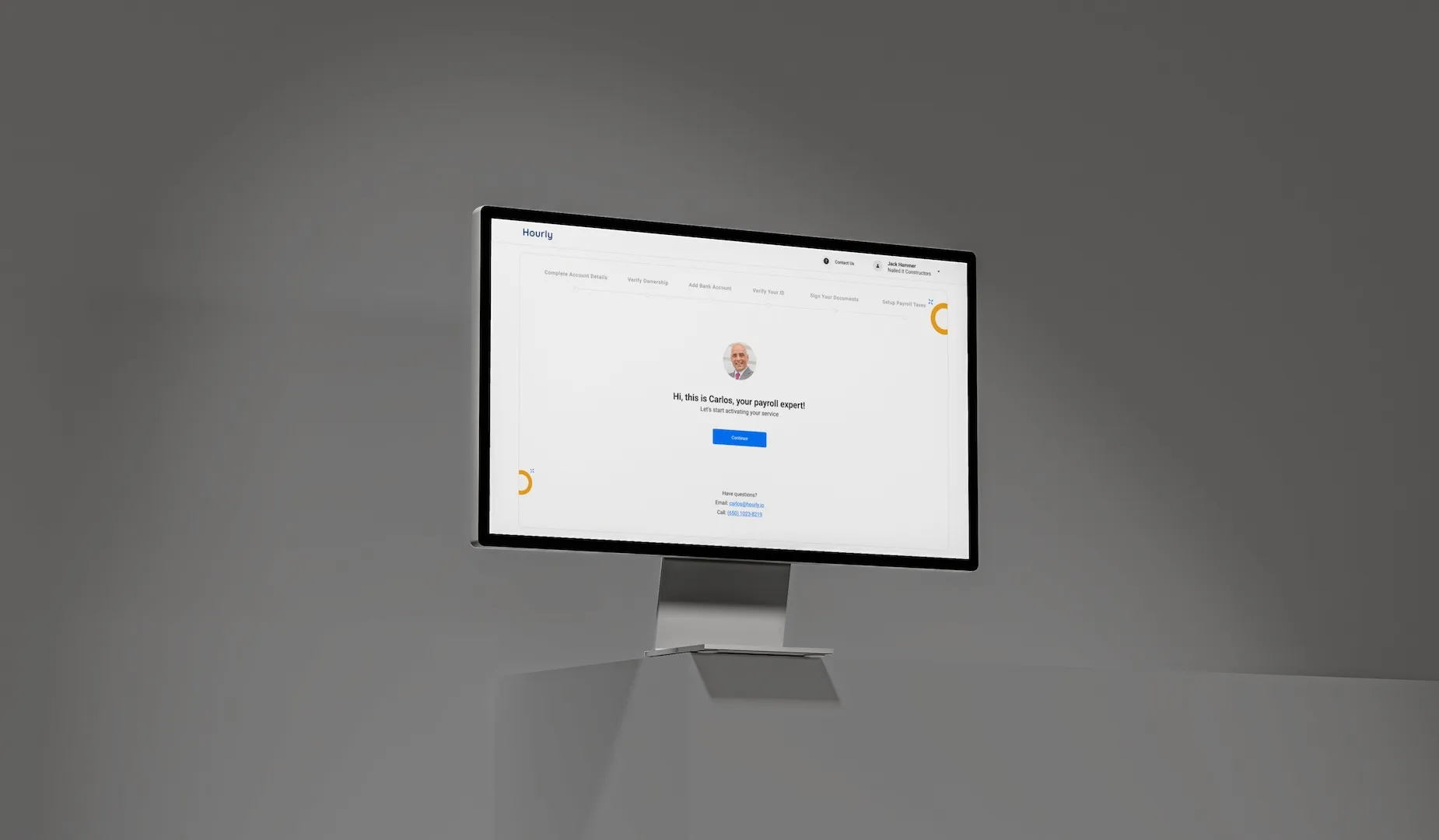
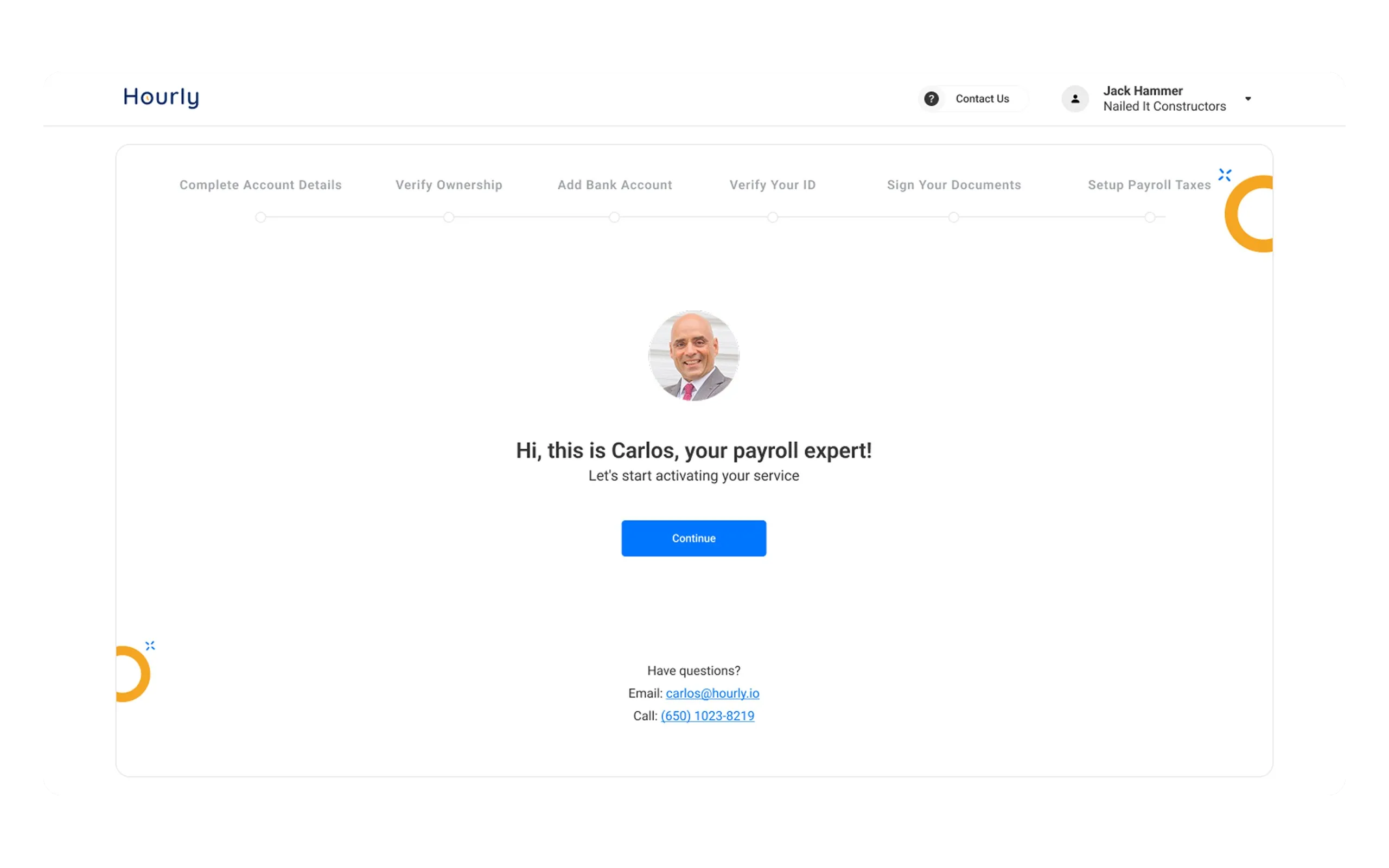
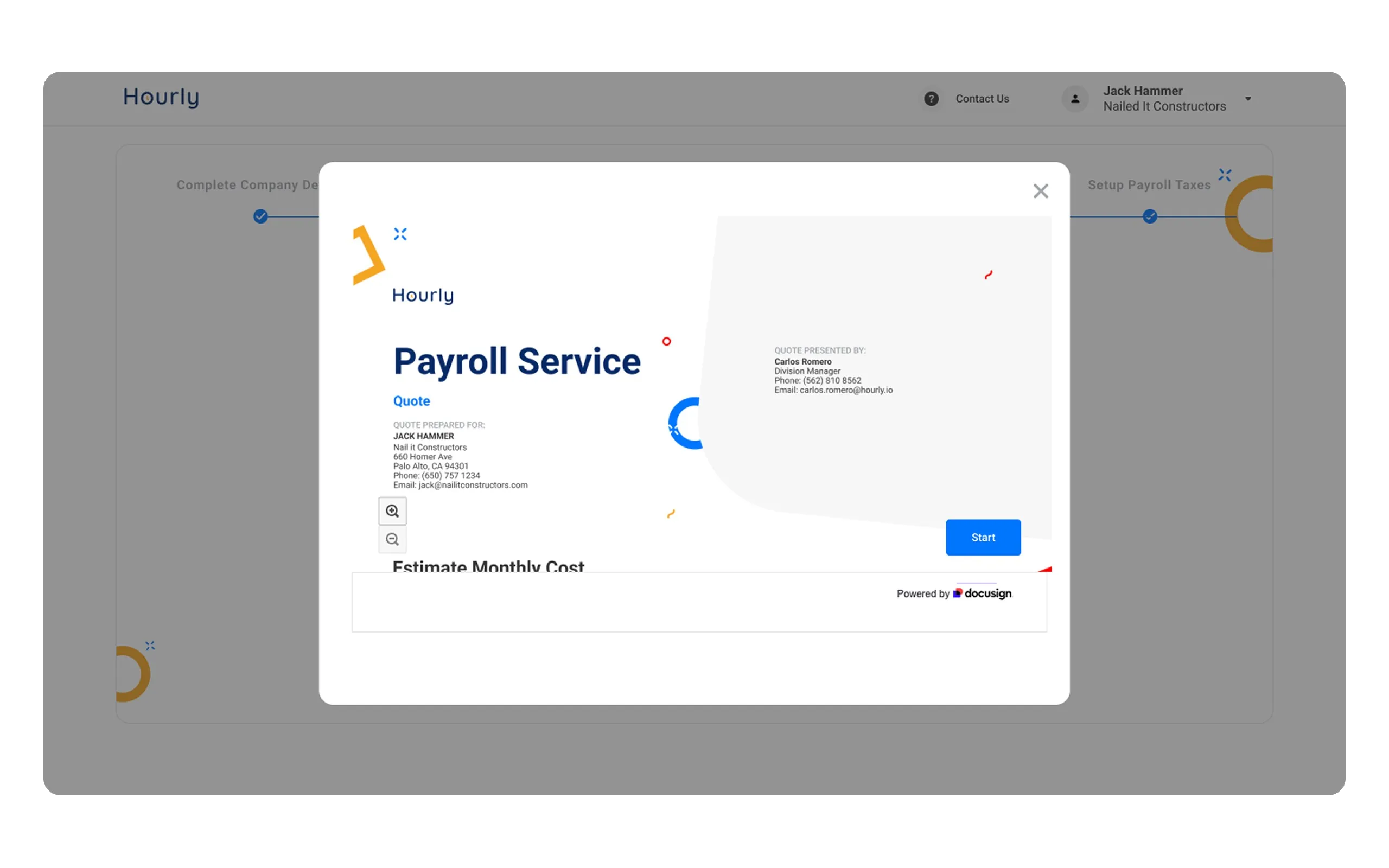
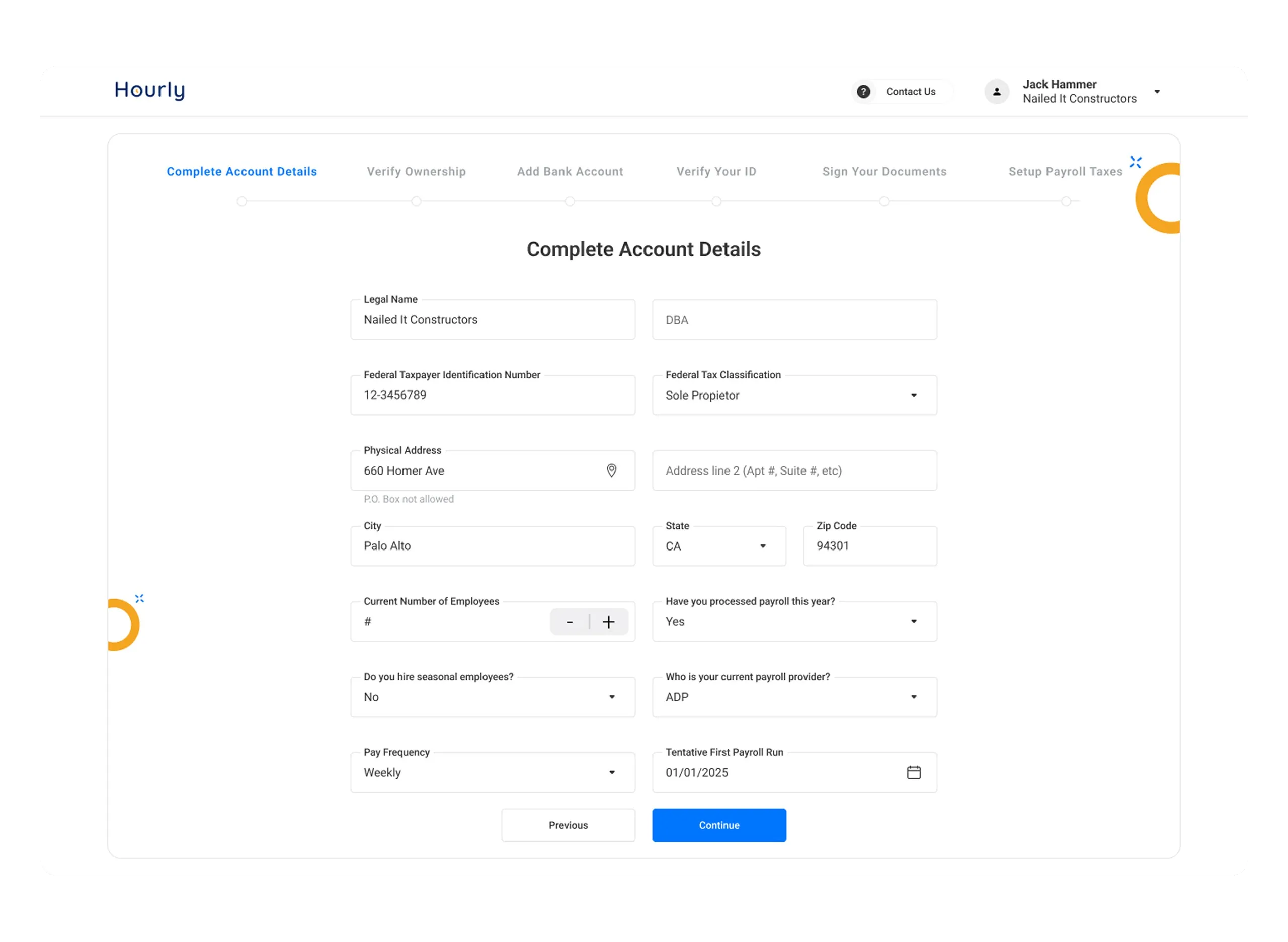
CSMs initiate the invite through the platform, not Sales, which matters for role clarity from the start. The customer gets a branded email and enters a guided stepper built around what compliance and banking actually require: account details, ownership verification, bank connection via Plaid, ID verification via Persona, document signing via DocuSign, payroll tax setup via CheckHQ. Four external services, one coherent experience. I worked closely with engineering to define integration points and design the transition states so the customer never felt like they’d left Hourly, even when third-party flows appeared mid-stepper.
I also guided another designer through identifying the new component requirements the stepper introduced. Behaviors and states that didn’t exist in our design system yet. We built them once and reused them across the platform rather than solving the same problem five different ways.
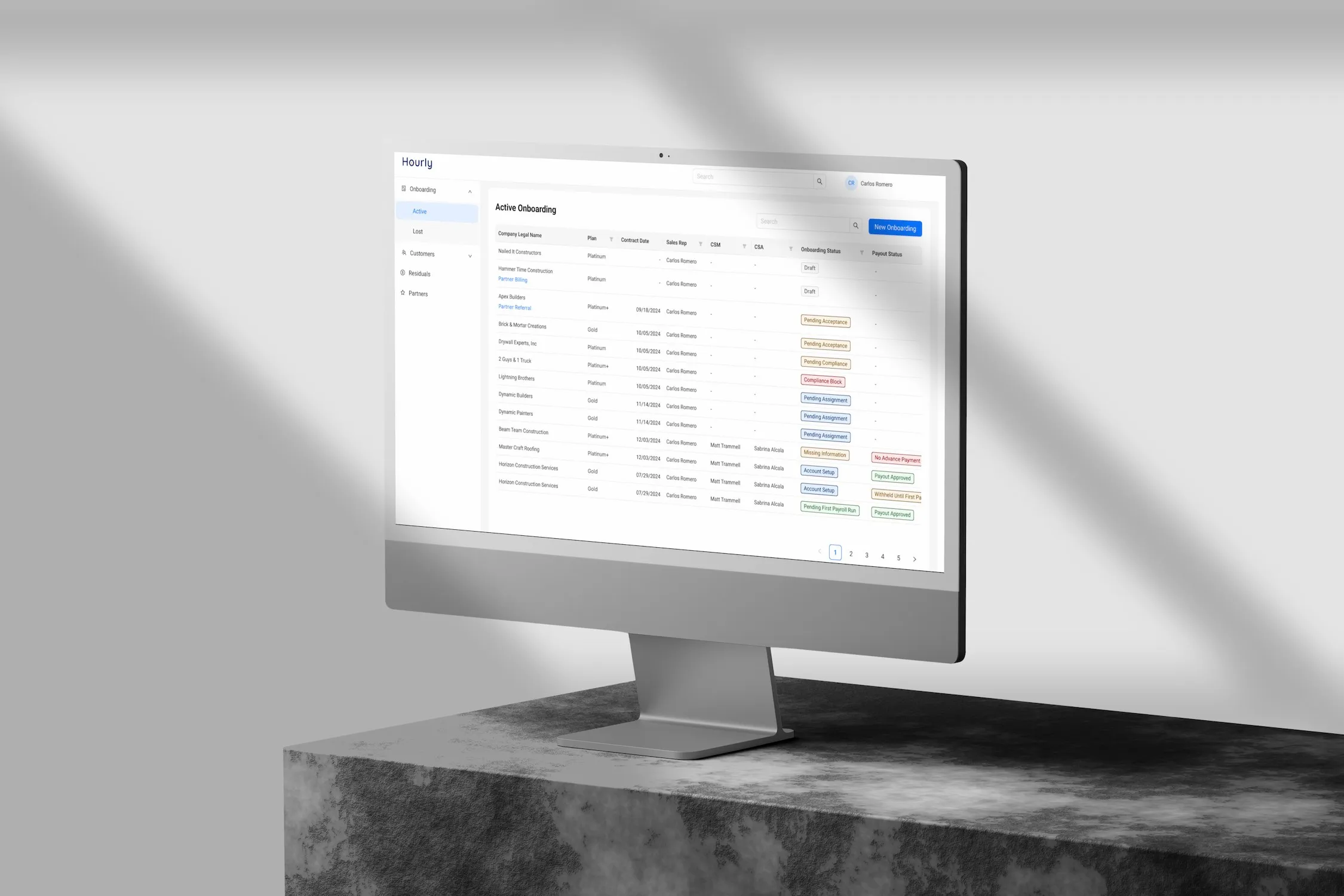
Documents in the flow are pre-populated. No more manual quote overrides. The internal team sees real-time step completion. No more email chains to figure out where a customer is stuck.
Impact
Onboarding went from several weeks to under 5 minutes. Commission losses from unverified leads dropped to zero, not because we changed the policy, but because the flow made it structurally impossible to pay out before verification. Retention held above 94%.
The organizational change was just as significant. Sales stopped chasing customers through the process and focused on generating leads, which is what they were actually hired to do. Compliance stopped receiving incomplete email packets and started working from a structured intake queue. CSMs stopped starting from scratch on every account.
The stepper also became the foundation for the internal operations platform, the other major project I led.
Reflections
The discovery phase was thorough but slow. I leaned heavily on working sessions and interviews, which were high quality but took time. A faster initial synthesis, even something as rough as a service blueprint, would have helped align stakeholders earlier and cut weeks off that phase.
The commission trigger change also needed its own stakeholder management track. It was the right call. But the friction it created with Sales was predictable in hindsight, and I could have gotten ahead of it with a separate conversation earlier in the process rather than surfacing it through design reviews.