Simplifying Payroll
Redesigning a high-stakes financial workflow so business owners can review, calculate, and run payroll with confidence. In minutes.
About Hourly
Hourly is a workforce management and payroll platform for SMBs with hourly workers. Payroll is the highest-stakes action in the product. Business owners are committing significant funds and need accuracy, clarity, and confidence before they submit.
- Role
- Product Design Director · Strategy & Execution
- Timeline
- 2023
- Location
- Remote
The Problem
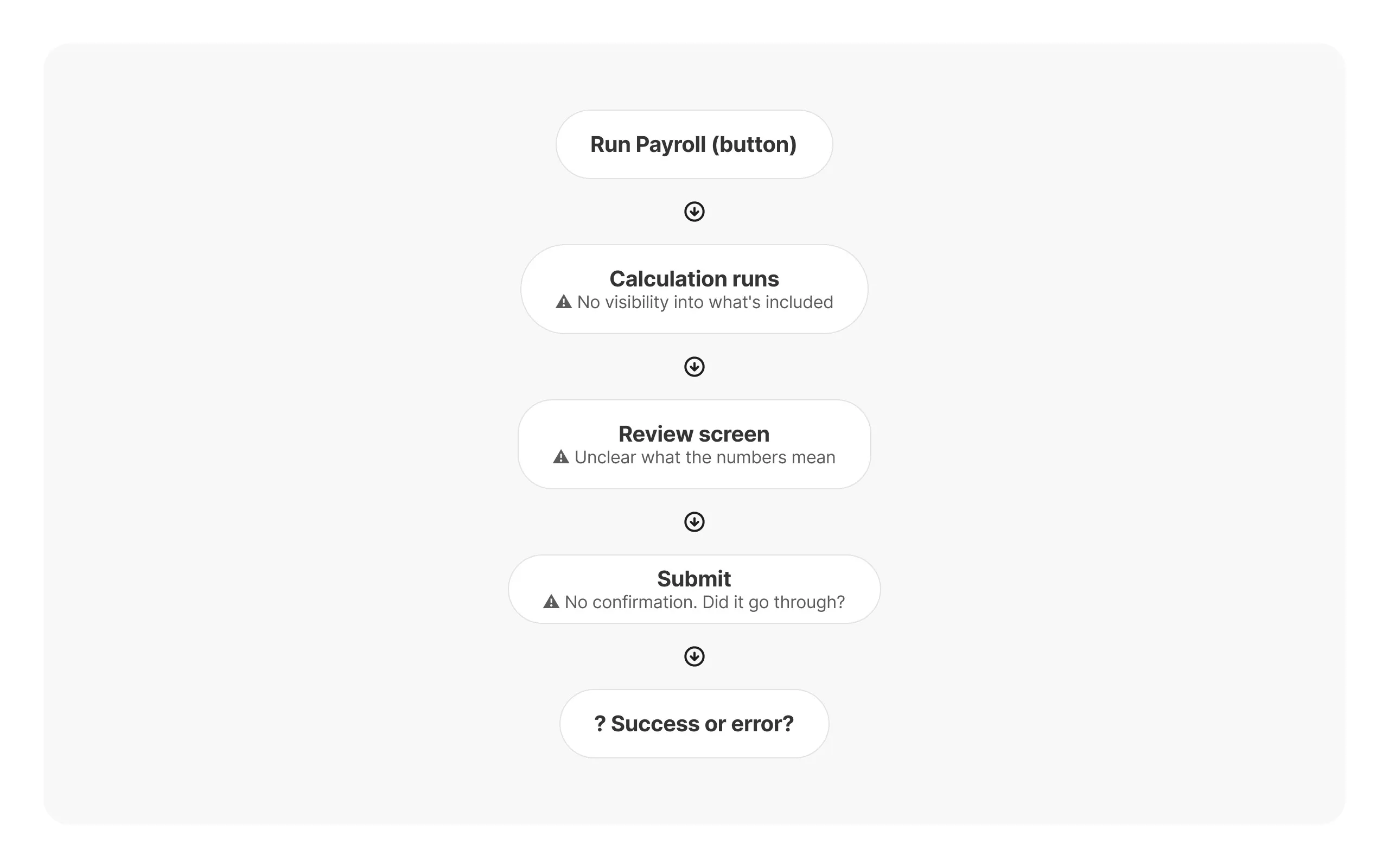
The existing payroll experience created friction and uncertainty at the worst possible moment. Users didn’t know what was included in the payment, feared making irreversible mistakes, and had no clear visibility into what was happening between calculation and submission. The result was anxiety, errors, and support tickets on the most time-sensitive action in the product.
Users ranged from tech-savvy HR leads to business owners with minimal digital experience. Top concerns from research: not knowing what’s included in the payment, fear of making irreversible mistakes, and needing a sense of control before money moves. The existing flow provided none of these.
The Thinking
High-stakes financial workflows fail when users can’t tell what’s about to happen or confirm that it did. That was the core insight. Each step needed to do one job and signal clearly that the job was done before unlocking the next. I partnered with engineering and compliance early to map every technical constraint and regulatory requirement into the interaction design, rather than treating them as handoff problems to solve later.
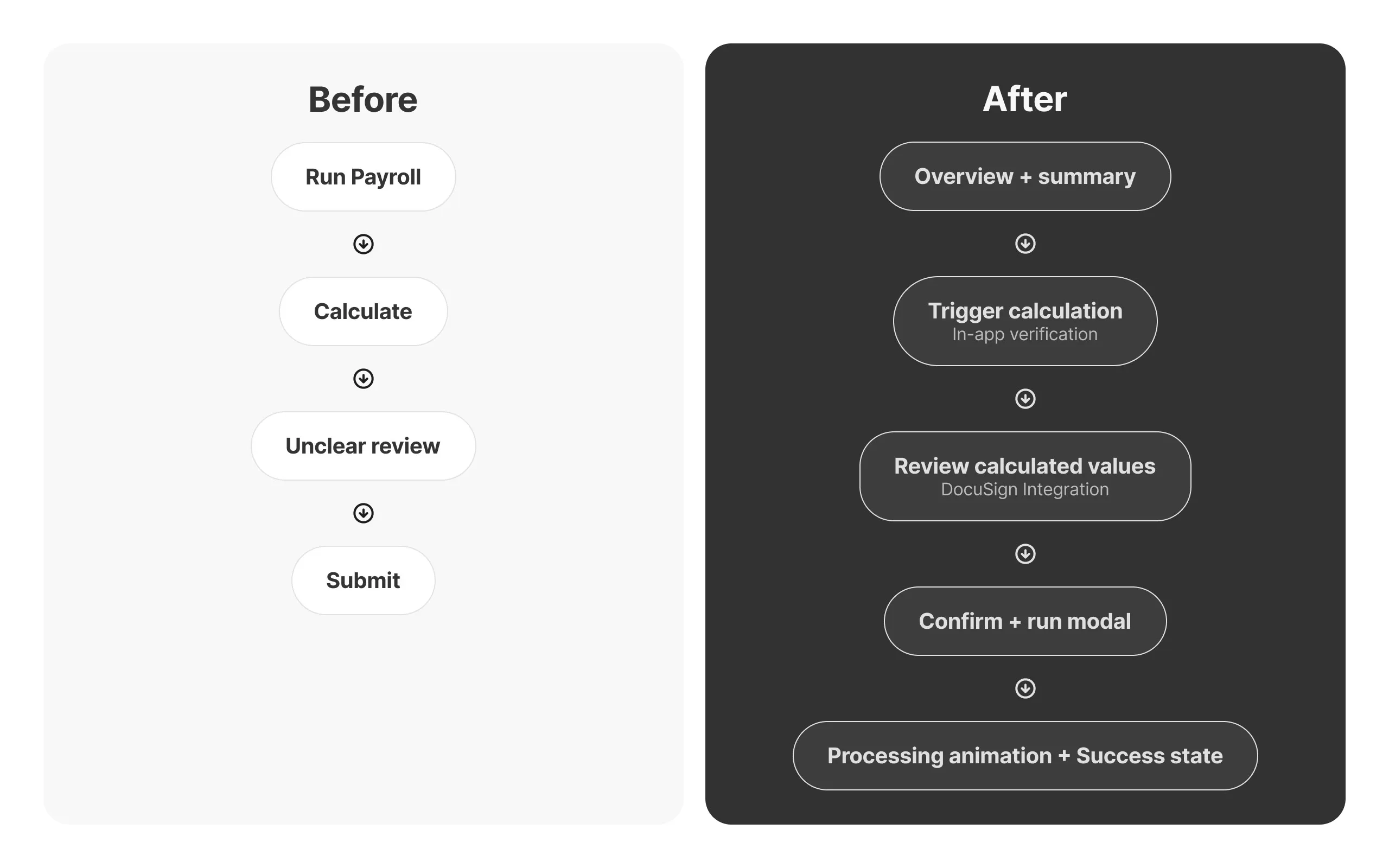
The Solution
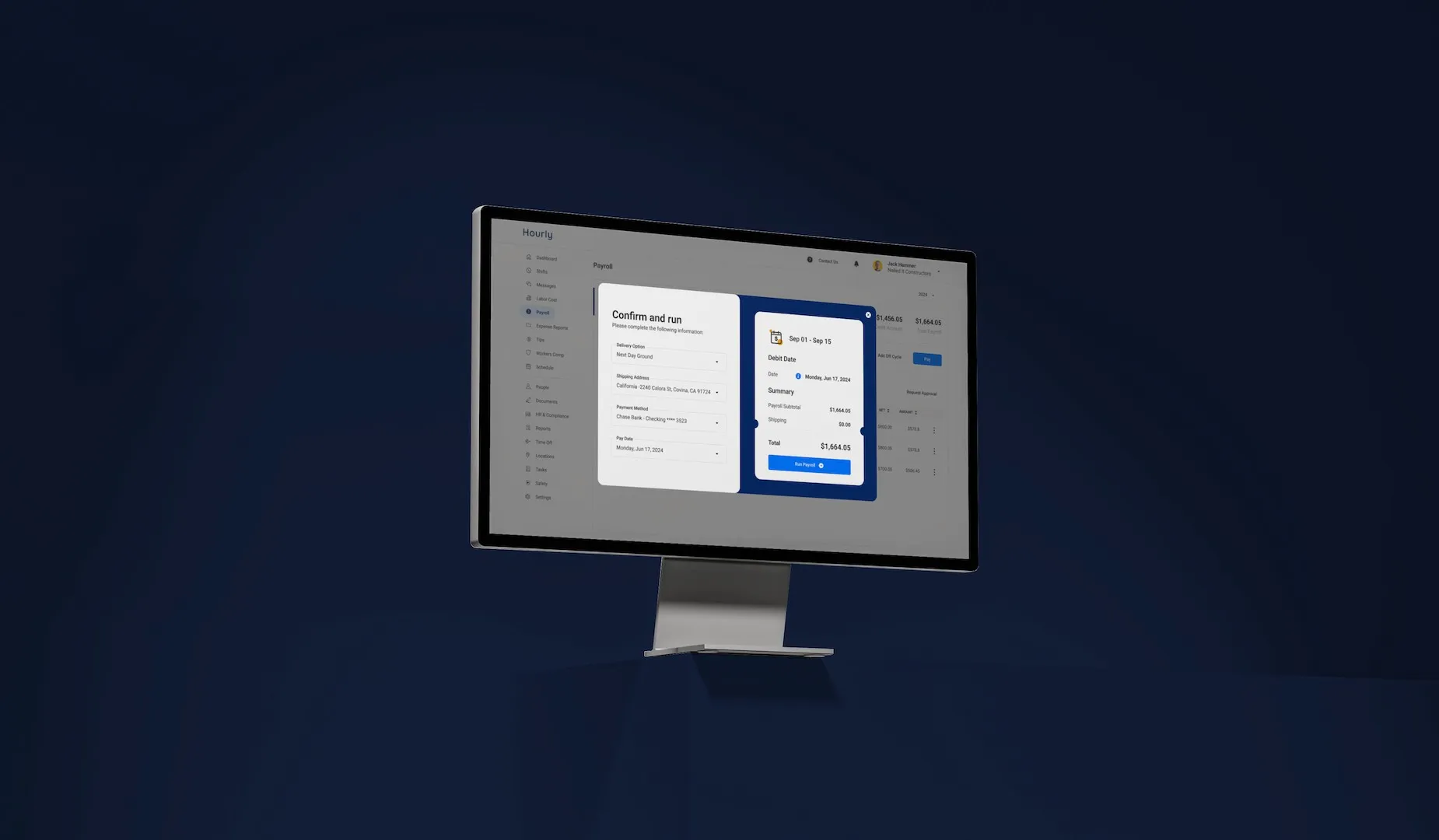
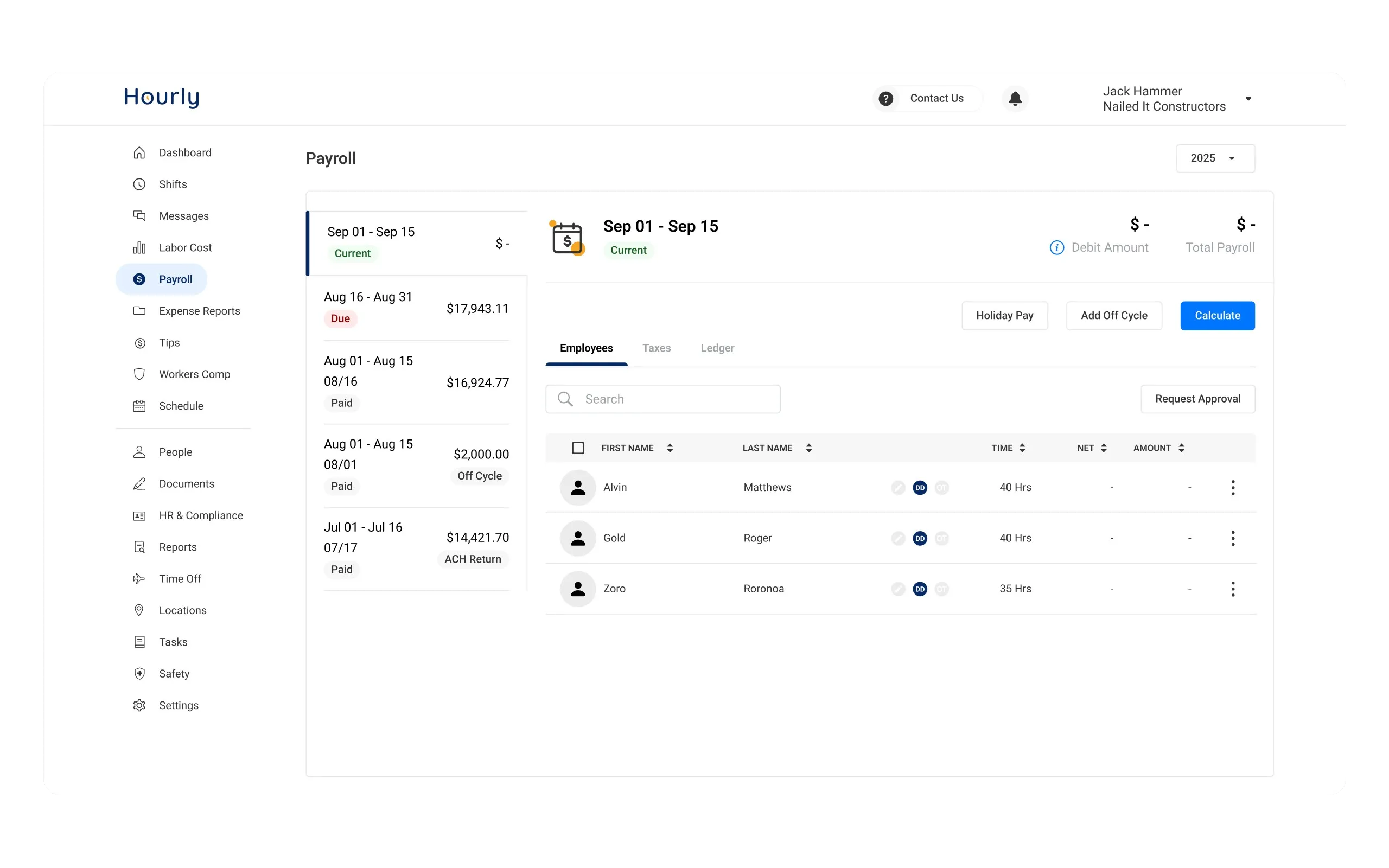
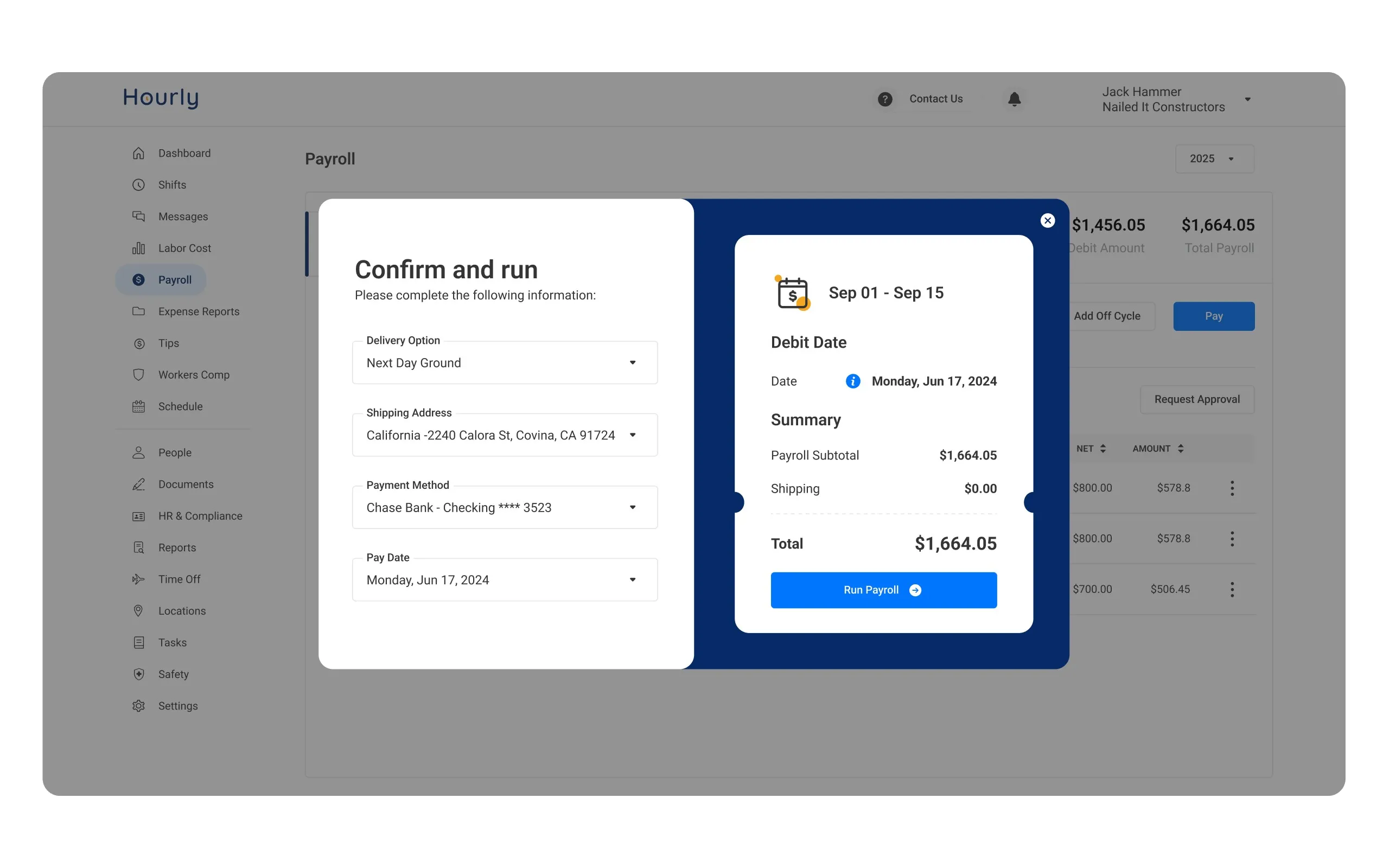
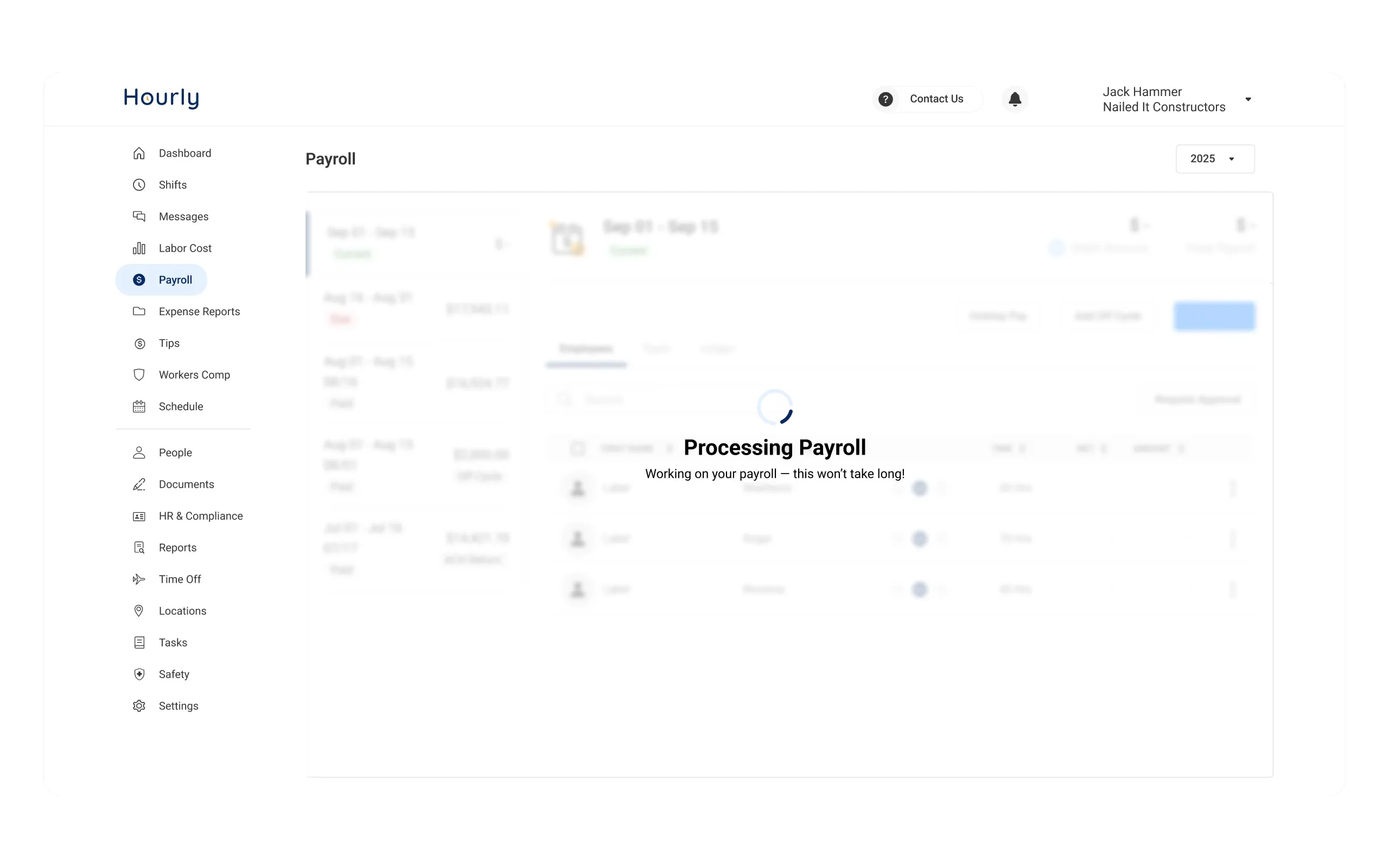
An intuitive guided flow: payroll overview, trigger calculation, review calculated values, confirm and run modal, confirmation dialog, processing animation, success state. Each step was designed to eliminate a specific anxiety. Duplicate submissions, unclear amounts, accidental triggers, and uncertainty about whether money actually moved.
Impact
Payroll errors and duplicate submissions dropped to zero after launch. Support tickets related to payroll confusion decreased significantly. The flow became the most-cited feature in customer retention conversations. Business owners described it as “the reason we stay.”
The result handled complex backend processes, pay cycles, off-cycle runs, tax payments, and bank transfers, while feeling simple to the person running it. That gap between backend complexity and front-end clarity was the whole design problem.
Reflections
Designing this flow taught me that interaction design for high-stakes workflows is inseparable from the engineering and compliance constraints underneath. The best decisions came from bringing those teams into design reviews early, not at handoff.
I’d also invest more in error and edge-case states from the start. We prioritized the happy path in early iterations and retrofitted edge cases later. That created rework. For financially critical flows, the edge cases are the product.